 Lee Hunter
Why indoor stone floors are laid differently to patios
Patios go down on sand and cement; indoor stone and porcelain floors go down on tile adhesive. Here is why the method matters.
The short answer
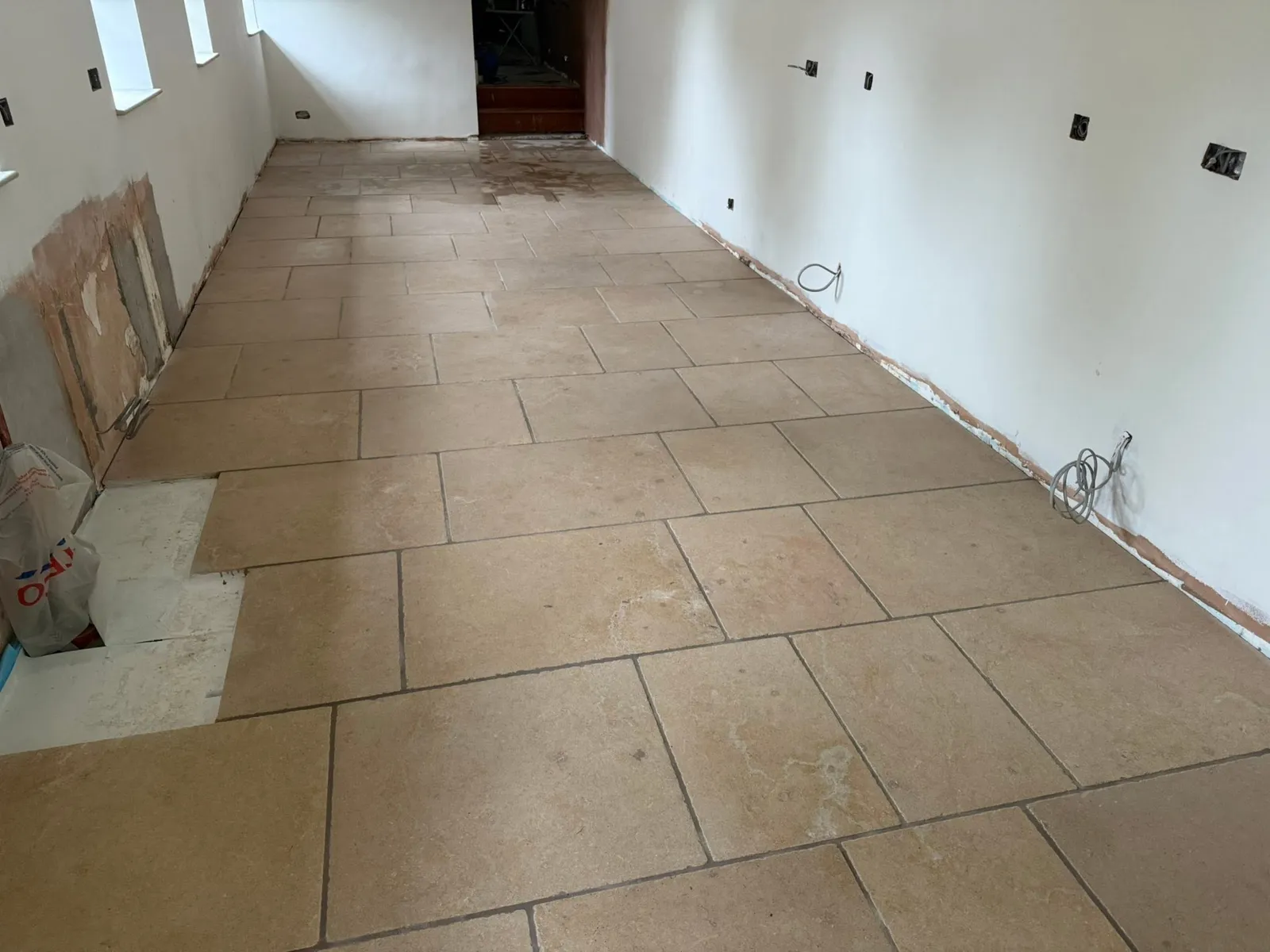
Outside, slabs are bedded on sand and cement over a compacted sub-base and laid to a fall. Inside, stone, porcelain and ceramic are bonded with tile adhesive onto a flat, prepared subfloor. They are different jobs with different methods, and mixing them up is how floors crack or come loose.
Why patios use sand and cement
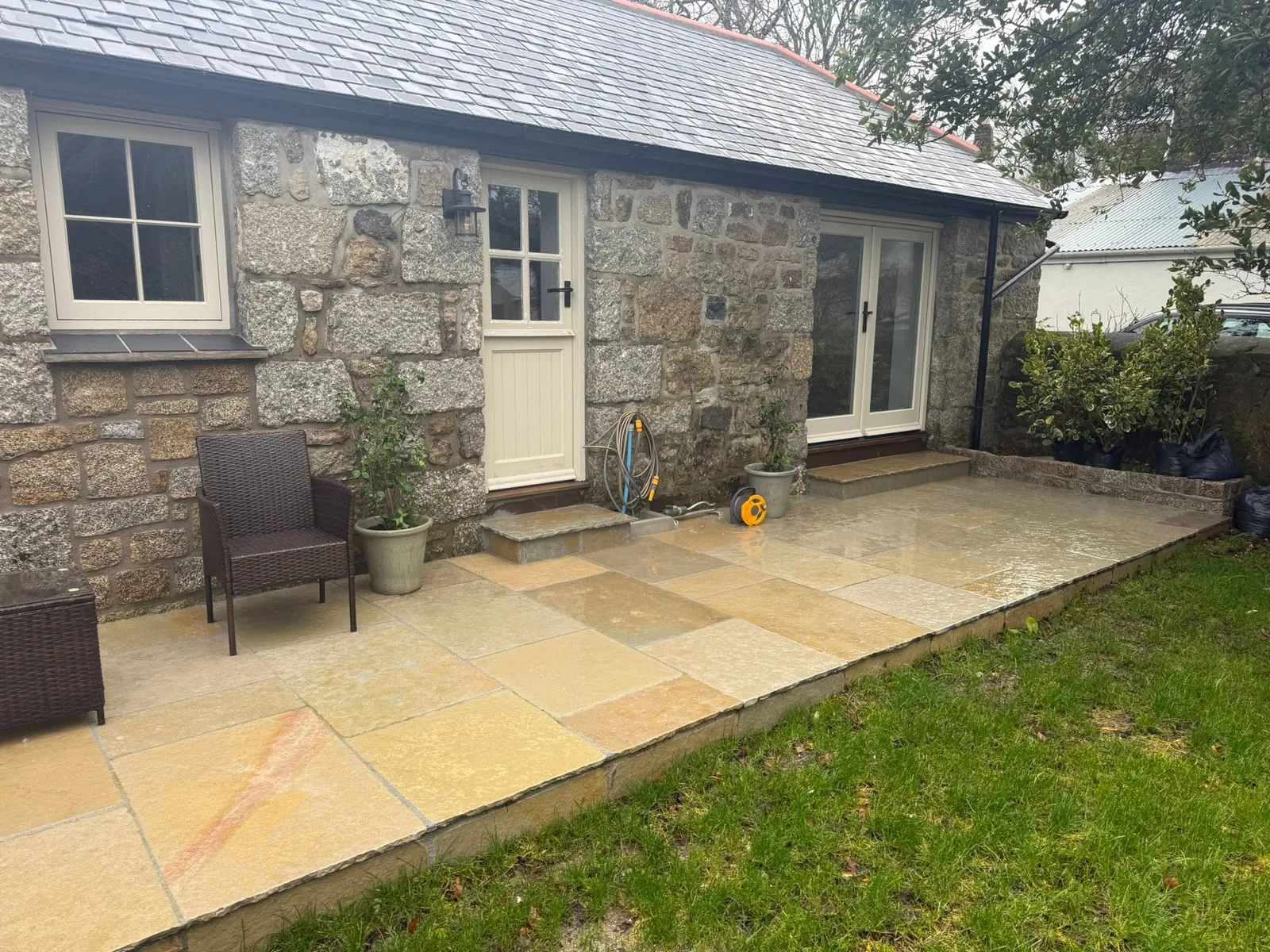
A patio has to cope with ground movement, frost and rain. A full sand and cement bed on a solid sub-base gives each slab firm support, and laying to a fall sends water away from the house instead of letting it sit.
Why indoor floors use adhesive
Indoors the floor needs to be flat, thin and firmly bonded, often over boards or screed, and often with heating underneath. Tile adhesive bonds the stone to a level subfloor across the whole tile, which is what keeps natural stone, limestone and porcelain from rocking or cracking in a warm house.
What that means for your job
If you are having both done, say a kitchen floor and a patio outside the back door, they will be priced and laid as two different jobs. We do both, and we will explain the preparation each one needs when we measure up.
More guides
Keep reading
Free locked-in quote
Tell us about the job and we'll price it properly.
A locked-in quotation means the price we give is the price you pay. Public liability insured, cashless invoices, and we take the waste away.